

Buying an Equestrian Property in Wellington, FL
For horse people, there’s Wellington, and then there’s everywhere else. This corner of western Palm Beach County is the winter capital of the equestrian world, where Olympic riders, world-class show jumping, and miles of bridle trails sit minutes from your barn. Buying an equestrian property in Wellington, FL is a different process than a standard home purchase, here’s what makes the market special and what to look for before you buy.
- The Winter Equestrian Festival runs 13 weeks (January–March) and is described as the largest and longest-running equestrian competition in the world, with over $16 million in prize money.
- Wellington’s Equestrian Preserve Area protects roughly 9,000 acres for equestrian use, with 100+ miles of bridle trails (Village of Wellington).
- Equestrian buyers evaluate barns/stalls, paddocks, arenas, acreage, footing, and trail/showground access, not just the house.
- Top equestrian communities include Palm Beach Polo, Grand Prix Village, Saddle Trail Park, and Paddock Park.
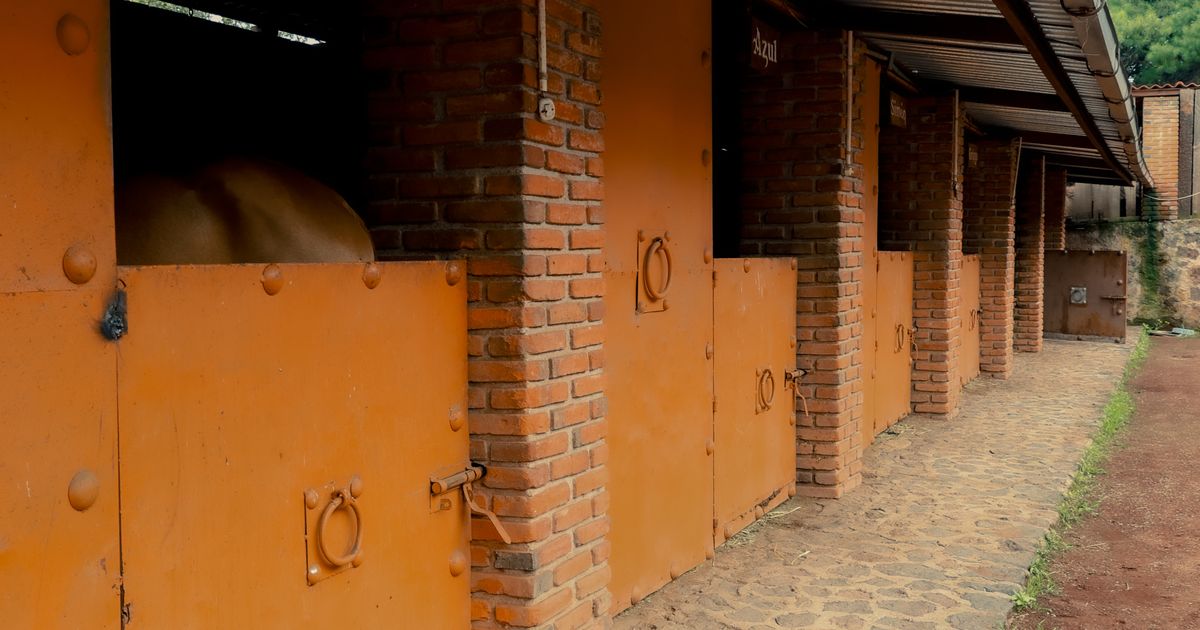
Barns and stalls are a core part of evaluating an equestrian property. Photo: Jonathan Valdes / Pexels.
Why is Wellington the place for equestrian property?
Because nowhere else concentrates the sport like Wellington. The Winter Equestrian Festival (WEF) runs 13 weeks from January through March and is billed as the largest and longest-running equestrian competition in the world, awarding more than $16 million in prize money across FEI-sanctioned show jumping (Wellington International; Wikipedia). Alongside it, the Adequan Global Dressage Festival brings roughly ten weeks of top-level dressage. The season turns Wellington into the gravitational center of the horse world each winter.
For property owners, that concentration is the value: demand for quality equestrian real estate is global, and proximity to the showgrounds is a premium feature in its own right.
What is Wellington’s Equestrian Preserve Area?
It’s the zoning backbone that makes the whole thing possible. Wellington’s Equestrian Preserve Area (EPA) sets aside roughly 9,000 acres in the western and southern village specifically for equestrian use, governed by the Equestrian Overlay Zoning District adopted in 2003, and laced with more than 100 miles of bridle trails (Village of Wellington). The Preserve also contains Wellington International and the National Polo Center.
That protected status matters to buyers: it preserves the equestrian character and trail network long-term, which underpins property values across the Preserve.
What should you look for in an equestrian property?
An equestrian purchase is really two purchases, the home and the horse facilities, and the facilities often drive the decision. Key things to evaluate:
- Barn and stalls: number, size, ventilation, wash stalls, tack and feed rooms, and condition.
- Paddocks and turnout: acreage, fencing, drainage, and how many horses the land supports.
- Riding arena: presence, size, and footing quality (footing and drainage are make-or-break in Florida).
- Acreage and zoning: whether the lot and EOZD zoning allow your intended number of horses and any commercial use.
- Access: proximity to the showgrounds and direct bridle-trail or hacking access, a true premium in the Preserve.
A standard home inspection won’t assess barns, footing, or equestrian infrastructure, so build in the right specialist evaluations.
Which Wellington communities are equestrian-focused?
Several Wellington communities are built around horses. Palm Beach Polo & Country Club pairs equestrian heritage with golf and polo; Grand Prix Village sits adjacent to the showgrounds and is prized by competitive riders for its proximity; and Saddle Trail Park and Paddock Park offer larger lots with direct trail access in the heart of the Preserve. Each has a different character, from full-service country-club living to working show barns, so the right community depends on whether you’re competing, breeding, or simply keeping horses at home. (Specifics like lot counts and trail mileage vary by source, so confirm details for any given neighborhood.)
What else should buyers know?
Timing and expertise matter here. The market is seasonal, tied to the January–March show calendar, when demand (and short-term rental interest from competitors) peaks. Zoning under the Equestrian Overlay District governs what you can do with the land, so verify it supports your plans before you buy. And because equestrian value lives in the facilities and location as much as the house, work with an agent who understands barns, footing, trail access, and the Preserve. For the broader luxury context of the area, see our Jupiter luxury guide and the latest Palm Beach County market report.
Frequently Asked Questions
Why is Wellington, FL famous for horses?
Wellington hosts the Winter Equestrian Festival, a 13-week January–March circuit described as the largest and longest-running equestrian competition in the world, with over $16 million in prize money, plus the Global Dressage Festival. It’s the winter capital of the equestrian world.
What is the Equestrian Preserve Area?
It’s a roughly 9,000-acre area of Wellington zoned specifically for equestrian use under the Equestrian Overlay Zoning District (adopted 2003), with more than 100 miles of bridle trails and home to Wellington International and the National Polo Center (Village of Wellington).
What should I look for in an equestrian property?
Evaluate the barn and stalls, paddocks and turnout, riding arena and footing, acreage and zoning (how many horses the EOZD allows), and access to showgrounds and bridle trails, not just the house. A standard inspection won’t cover equestrian facilities.
Which Wellington neighborhoods are best for horses?
Equestrian-focused communities include Palm Beach Polo & Country Club, Grand Prix Village (adjacent to the showgrounds), Saddle Trail Park, and Paddock Park. The best fit depends on whether you’re competing, breeding, or keeping horses at home.
Is the Wellington equestrian market seasonal?
Yes. Demand peaks with the January–March show season, when riders and owners arrive for the Winter Equestrian Festival and dressage circuit. That seasonality affects both sales activity and short-term rental interest.
Looking for an Equestrian Property in Wellington?
The Cahur Group helps buyers navigate Wellington’s equestrian market, evaluating facilities, zoning, and showground access, not just the house. Contact us or call 561-401-5758.
Cibie Cahur is the founder and lead agent of The Cahur Group at Keller Williams Realty, serving Palm Beach and Martin County, Florida. A Top 1% Keller Williams agent from 2017 to 2024, she leads an eight-agent team and works with buyers and sellers in English, Spanish, and French. Reach her at 561-401-5758.
Sources
- Wellington International, Winter Equestrian Festival & venues, retrieved 2026-06-09, https://www.wellingtoninternational.com/winter-equestrian-festival/
- Village of Wellington, Equestrian Preserve Area / Equestrian Overlay Zoning District (official), retrieved 2026-06-09, https://www.wellingtonfl.gov/
- Wikipedia, Winter Equestrian Festival, retrieved 2026-06-09, https://en.wikipedia.org/wiki/Winter_Equestrian_Festival