

How Remote Work Is Changing Palm Beach County Buyer Behavior
Remote work has quietly rewritten the rules of homebuying, and Palm Beach County has been one of the clearest beneficiaries. When your office is wherever your laptop is, the daily commute stops dictating where you live, and lifestyle, space, and climate move to the top of the list. Understanding how remote work is changing Palm Beach County buyer behavior, and reading the data honestly rather than the hype, helps both buyers and sellers make smarter decisions in this market.
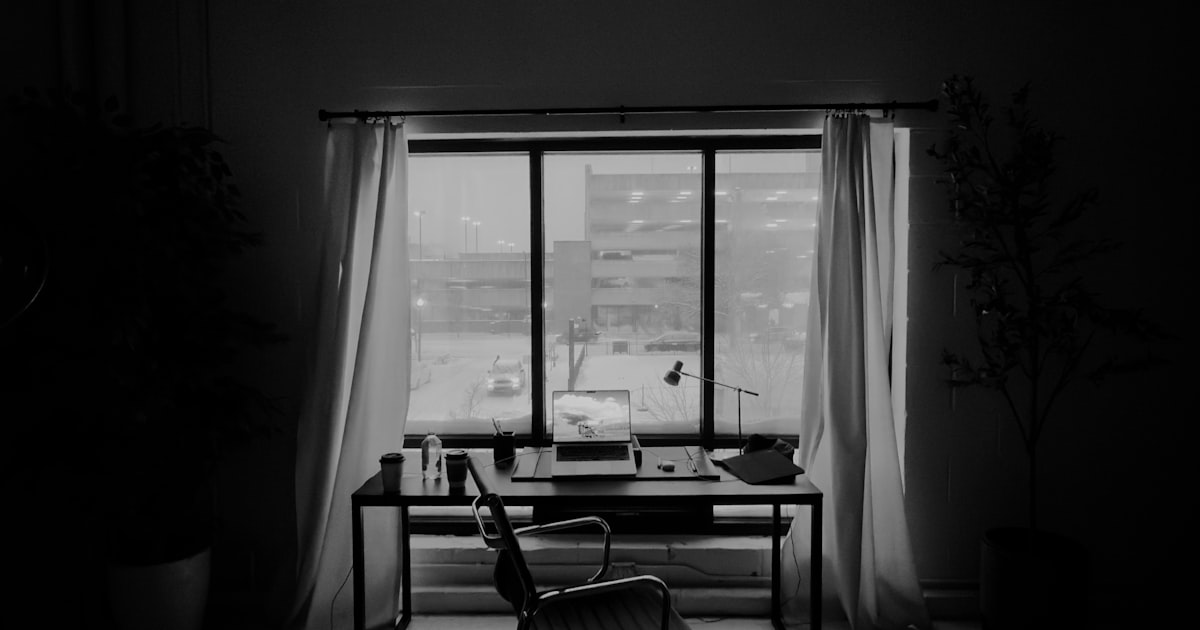
The home office has become a core buying criterion. Photo: Jon Tyson / Unsplash.
How common is remote work in 2026?
Remote work is no longer a pandemic experiment; it has settled into a durable share of how Americans work. Working from home accounts for about 25% of all paid workdays in the U.S. as of 2025, a level that has held roughly steady since 2023 rather than continuing to fall (Stanford Institute for Economic Policy Research). Hybrid is now the dominant model: roughly 80% of Fortune 500 companies use a hybrid setup, typically around three days in office and two at home (Stanford / WFH Research).
Just as important, the back-to-office push has largely stalled. Only about 12% of executives with hybrid or remote staff planned a new return-to-office mandate in the year ahead (Stanford). For buyers, that means the flexibility that makes a Palm Beach County move possible is not going away.
How has remote work changed where people buy?
The biggest shift is that commute distance no longer anchors the search. Buyers who once needed to live within 30 minutes of an office can now prioritize the things that actually shape daily life: a dedicated home office, more square footage, outdoor space, and proximity to beaches and recreation. In Palm Beach County, that has pushed interest toward homes and neighborhoods that deliver lifestyle and room to work, not just a short drive downtown.
It also widens the search geographically. With commuting off the table, buyers consider areas where their budget stretches further, from Jupiter and Palm Beach Gardens to Martin County, trading a corporate ZIP code for water access, golf, and space.
Is remote work still driving people to Florida?
Here is where honesty matters. Remote work did fuel a historic wave of relocation to Florida, but that wave has receded. Florida’s net domestic migration fell from about 310,892 in 2022 to 183,646 in 2023 and to roughly 22,517 in 2025, dropping the state from the top of the rankings to around eighth (U.S. Census Bureau, reported by Florida Realtors). So the accurate story is not that migration is surging, it is that the pandemic flood has slowed.
The nuance: Florida is still drawing net newcomers, just at a calmer pace. By a driver’s-license-exchange measure, in-migration ran about 393,000 in 2025, still modestly above the pre-pandemic average of roughly 358,000 (Florida Realtors). The takeaway is “cooling, not reversing”, remote work permanently widened the pool of people who can move to Palm Beach County, even if fewer are doing so at once.
What does this mean for Palm Beach County buyers?
If you work remotely, you have more freedom than buyers did a decade ago, but you should buy for it deliberately. Prioritize a true home-office space (a dedicated room, not a converted corner), reliable high-speed internet, and the outdoor and lifestyle features that make working from home in Florida worth it. Because relocation has calmed, you also face slightly less frenzied competition than at the 2021–2022 peak, which can mean more room to negotiate. For relocating buyers, our guide to moving to Jupiter from New York walks through the tax and cost math.
What does it mean for sellers?
Sellers should market to how buyers now live. Highlight and stage a functional home office, mention internet speed and connectivity, and showcase outdoor living and flexible rooms that can flex between work and life. A home that photographs and shows well as a remote-work-friendly property speaks directly to a large, durable segment of today’s buyers.
Frequently Asked Questions
How much of work is still remote in 2026?
Working from home accounts for about 25% of all paid workdays in the U.S. as of 2025, a level that has held steady since 2023, and roughly 80% of Fortune 500 companies use a hybrid model (Stanford Institute for Economic Policy Research / WFH Research).
Is everyone still moving to Florida because of remote work?
No. Florida’s net domestic migration cooled sharply, from about 310,892 in 2022 to roughly 22,517 in 2025 (U.S. Census Bureau via Florida Realtors). Florida still gains net newcomers, but at a calmer pace than the pandemic peak, “cooling, not reversing.”
What do remote-work buyers look for in a home?
Most prioritize a dedicated home office, reliable high-speed internet, additional square footage or flexible rooms, and outdoor living space, often valuing lifestyle and space over proximity to a downtown office.
Does remote work expand where buyers will look in Palm Beach County?
Yes. Without a commute constraint, buyers consider a wider area, from Jupiter and Palm Beach Gardens to Martin County, often choosing locations where their budget buys more home, water access, or amenities.
How should sellers market to remote workers?
Stage and highlight a functional home office, note internet connectivity, and showcase flexible rooms and outdoor living, the features remote-work buyers prioritize most.
Buying or Selling in a Remote-Work Market?
Whether you are relocating to Palm Beach County or selling to today’s buyers, The Cahur Group can help you align with how the market actually works now. Contact us or call 561-401-5758.
Cibie Cahur is the founder and lead agent of The Cahur Group at Keller Williams Realty, serving Palm Beach and Martin County, Florida. A Top 1% Keller Williams agent from 2017 to 2024, she leads an eight-agent team and works with buyers and sellers in English, Spanish, and French. Reach her at 561-401-5758.