

Waterfront Homes in Palm Beach County: A Buyer’s Guide to Intracoastal, Ocean, and Lakefront Living
Buying a waterfront home in Palm Beach County is one of the most rewarding real estate decisions you can make, and one of the most detailed. Before you fall for the view, it helps to understand the three main kinds of waterfront property here: oceanfront, Intracoastal, and lakefront. Each one carries a different lifestyle, a different price point, and a different set of things to check before you sign. This guide to waterfront homes in Palm Beach County walks through all three so you can match the water to the way you actually want to live.
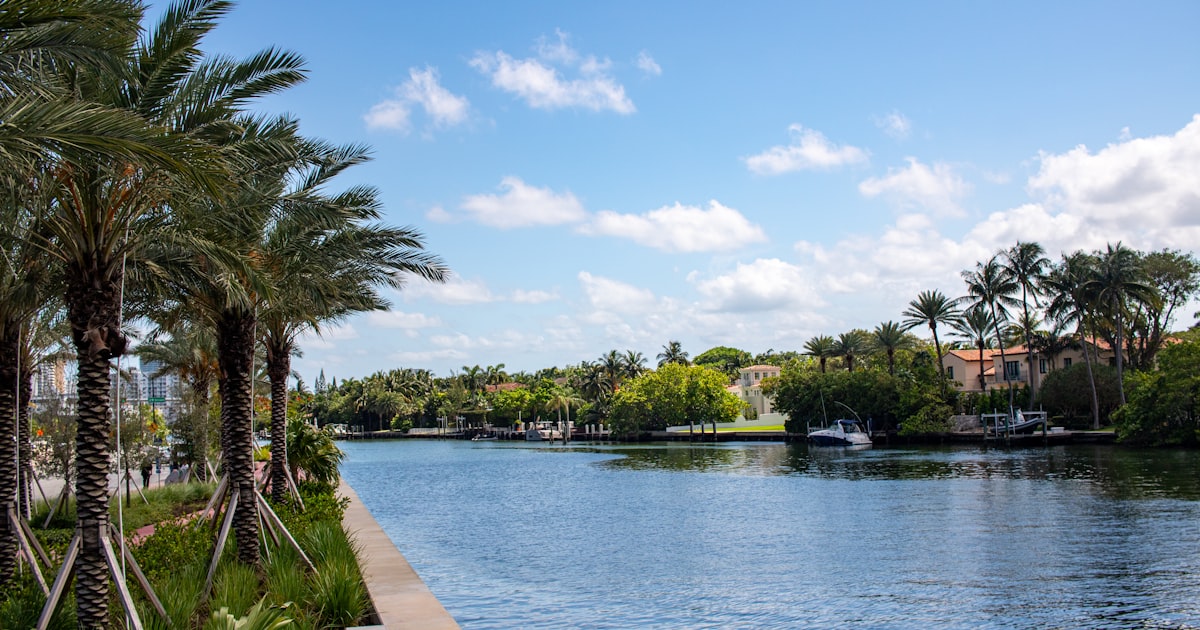
Palm trees lining the Intracoastal Waterway in Palm Beach County. Photo: Zoshua Colah / Unsplash.
What are the main types of waterfront homes in Palm Beach County?
Palm Beach County waterfront homes fall into three broad categories. Oceanfront homes sit directly on the Atlantic, with private or deeded beach access and the highest price tags in the market. Intracoastal homes line the Intracoastal Waterway and usually offer the best boating, since a private dock can reach the ocean through nearby inlets. Lakefront homes sit on interior lakes inside golf and country-club communities, and they are the most affordable way to own water frontage.
Each type appeals to a different buyer. Oceanfront suits people who want the beach as their backyard and treat the home as a legacy asset. Intracoastal suits boaters and anglers who want to leave the dock and be in open water within minutes. Lakefront suits buyers who want calm water views, lower maintenance, and the amenities of a planned community without the cost or exposure of direct ocean frontage.
How much do waterfront homes cost in Palm Beach County?
There is no single waterfront price, but the county’s overall numbers give you a floor to build from. The median single-family home in Palm Beach County sold for about $645,000 in March 2026, up 3.2% year over year, while the median condo sold for roughly $330,000 (BeachesMLS / MIAMI REALTORS). Waterfront homes trade at a premium to those figures, and oceanfront trades at a steep premium to Intracoastal and lakefront.
In Jupiter specifically, the median sale price was around $722,000 in early 2026, about $434 per square foot (Redfin). Lakefront homes inside golf communities can start near or below the county median, Intracoastal homes with dockage climb well into the millions, and trophy oceanfront estates reach the highest end of the market. The right budget question is not “what does waterfront cost” but “which kind of water fits my budget and my lifestyle.”
What’s the difference between oceanfront and Intracoastal homes?
The short version: oceanfront gives you the beach and the views, Intracoastal gives you the boat and the protection. Oceanfront homes face open Atlantic water, deliver sunrise views and beach access, and carry the highest insurance and maintenance costs because of salt, wind, and storm surge exposure. Intracoastal homes sit on calmer, protected water, are far easier to dock a boat on, and generally cost less to insure than direct ocean frontage.
Many buyers assume oceanfront is automatically “better.” For boaters it often is not. A dock on the Intracoastal lets you cruise, fish, or reach a waterfront restaurant by water, then return to a home that took less of a beating from the open ocean. Oceanfront wins on prestige and beach lifestyle; Intracoastal wins on day-to-day water use and running costs.

A lakefront home on calm interior water, the most accessible entry point to waterfront living. Photo: Following NYC / Pexels.
Do you need flood insurance for a waterfront home?
In almost every case, yes, and it is separate from your homeowners policy. A standard homeowners policy does not cover flood damage; flood coverage is a distinct policy, most often written through the National Flood Insurance Program (NFIP), run by FEMA. If you buy in a designated high-risk flood zone with a federally backed mortgage, your lender will require it.
Know the limits before you budget. NFIP policies cap building coverage at $250,000 and personal-property (contents) coverage at $100,000 for a single-family home (FEMA). On a waterfront home worth far more than $250,000, that NFIP cap will not rebuild the structure, so buyers in this market typically add private excess flood insurance on top of the NFIP base. Since October 2021, FEMA prices NFIP policies under Risk Rating 2.0, which sets premiums by specific property characteristics, such as elevation and distance to water, rather than by broad flood-zone tables alone (FEMA). Two homes on the same street can carry very different flood premiums, so always get a quote on the exact address before you commit.
What should you check before buying a waterfront home?
Waterfront homes come with systems that inland homes do not have, and each one is a potential cost. Before you buy, inspect the seawall, dock, and elevation as carefully as you inspect the roof. A failing seawall or an unpermitted dock can turn a dream purchase into a six-figure repair.
- Seawall condition: On Intracoastal and many lakefront lots, the seawall holds the property in place. Ask its age, material, and last inspection date, and budget for eventual replacement.
- Dock and lift permits: Confirm the dock, davits, and boat lift are permitted and that the permits transfer. Verify water depth at low tide if you plan to keep a larger boat.
- Elevation certificate: This document records the home’s elevation relative to the base flood elevation and directly affects your flood premium under Risk Rating 2.0.
- Wind and storm exposure: Palm Beach County enforces wind-borne-debris protection under the Florida Building Code, so check that windows, doors, and roof tie-downs meet current standards. (Note: the High-Velocity Hurricane Zone designation applies only to Miami-Dade and Broward counties, not Palm Beach.)
- Insurance quotes up front: Get both homeowners and flood quotes on the specific address during your due-diligence period, not after.
For a deeper look at storm-readiness features that can lower your costs, see our guide to hurricane-resilient home buying in South Florida.
Are waterfront homes a good investment in Palm Beach County?
Historically, yes, because the supply is fixed. There is a finite amount of oceanfront and Intracoastal frontage in Palm Beach County, and no one is making more of it. That scarcity has supported strong long-term demand, and the county’s luxury and cash-buyer activity reinforces it: cash accounted for about 52.6% of all Palm Beach County home sales, well above the national rate of roughly 27% (BeachesMLS / MIAMI REALTORS), which signals deep, financially strong demand at the top of the market.
That said, treat a waterfront home as a long-term lifestyle asset, not a quick flip. Higher insurance, maintenance, and seawall or dock upkeep mean carrying costs are real. Buyers who hold these homes and enjoy them tend to do well; buyers who overextend on a trophy property and need to sell quickly have less room for error. For current pricing and absorption trends, review our Q1 2026 Palm Beach County market report.
Frequently Asked Questions
What is the most affordable type of waterfront home in Palm Beach County?
Lakefront homes inside golf and country-club communities are generally the most affordable way to own waterfront property. They offer calm water views and community amenities without the price, insurance, or storm exposure of direct oceanfront or Intracoastal frontage.
Is flood insurance required on every waterfront home?
It is required if your home sits in a designated high-risk flood zone and you have a federally backed mortgage. Even when it is not required, flood insurance is strongly recommended on any waterfront home because standard homeowners policies do not cover flood damage.
How much flood coverage can I get through the NFIP?
The National Flood Insurance Program caps building coverage at $250,000 and contents coverage at $100,000 for a single-family home (FEMA). Homes worth more than the building cap usually add private excess flood insurance to cover the gap.
Can I keep a boat at a Palm Beach County waterfront home?
Often yes, especially on the Intracoastal Waterway, which offers the easiest ocean access through local inlets. Confirm that the dock and lift are permitted, check water depth at low tide for your boat’s draft, and verify the permits transfer with the sale.
Do waterfront homes cost more to insure?
Generally yes. Oceanfront homes carry the highest premiums due to wind and storm-surge exposure, and all waterfront homes typically need separate flood insurance. Premiums vary by elevation and distance to water under FEMA’s Risk Rating 2.0, so always get a quote on the specific address.
Find Your Palm Beach County Waterfront Home
Whether you are weighing oceanfront prestige, Intracoastal boating, or a calmer lakefront lifestyle, the right choice comes down to how you want to live and what you want to spend carrying the home. The Cahur Group helps buyers compare waterfront options across Palm Beach and Martin County and run the real numbers before they make an offer. Contact us or call 561-401-5758 to start your search.
Cibie Cahur is the founder and lead agent of The Cahur Group at Keller Williams Realty, serving Palm Beach and Martin County, Florida. A Top 1% Keller Williams agent from 2017 to 2024, she leads an eight-agent team and works with buyers and sellers in English, Spanish, and French. Reach her at 561-401-5758.