

Single-family homes on Palm Beach Island closed at a $15.4 million median in the second quarter of 2026, up 18% year over year (Corcoran, 2Q 2026 barrier islands report). Most buyers arrive with the price figured out. Fewer have looked at the town’s review process, which governs what can be built on a given lot, or at the construction calendar, which governs when. Florida’s tax treatment of a second home tends to be the third surprise.

Key Takeaways
- 50 single-family closings at a $15.4 million median in 2Q 2026, up 35% in volume (Corcoran).
- Condos and co-ops are a separate market: 139 closings, $1.5 million median.
- Short-term rentals are prohibited townwide (Town of Palm Beach).
- Islandwide, no construction on weekends or holidays from November 1 to April 30.
- Second homes get a 10% assessment cap, not the 3% homestead cap, and the assessment resets to market value the year after a sale.
What does it cost to buy on Palm Beach Island right now?
In the second quarter of 2026, the Town of Palm Beach recorded 50 single-family closings, a 35% year-over-year increase, at a $15.4 million median and a $17.9 million average (Corcoran, Coastal Palm Beaches & Barrier Islands Market Report: 2Q 2026, published July 16, 2026). Single-family inventory fell 5% over the same period.
Volume and price moved together, which is unusual. Closings above $20 million doubled year over year, and the condominium and co-op segment set record highs while its inventory dropped 20%.
Put that next to the mainland and the gap is obvious. In June 2026, the countywide single-family median across Palm Beach County was $700,000 (MIAMI REALTORS, Palm Beach County Total Home Sales Jump for 10th Consecutive Month, published July 17, 2026). County-level medians tell you very little about what a house on the island will cost, even though the two share a tax collector.
Buyers weighing the island against Manalapan, a barrier-island enclave a few miles down the coast to the south, should start with our Manalapan vs. Palm Beach Island comparison. The rest of this guide assumes the island is already the choice.
Single-family, condo or co-op: which market are you in?
The two segments barely overlap on price. In the second quarter of 2026, the island’s 139 condominium and co-op closings carried a $1.5 million median against $15.4 million for single-family homes, a gap of roughly ten to one (Corcoran, 2Q 2026). Attached housing holds the island’s lower price tiers, and a building’s board writes as many of the rules as the town does.
Rental rules apply the same way in both segments. The Town of Palm Beach states plainly in its published FAQ that “all short-term rentals, including, but not limited to Airbnb are strictly prohibited.” Long-term rental is allowed if you’re renting a single property, and owning more than one rental unit in town triggers a Business Tax Receipt requirement.
That rule takes an entire financing argument off the table. Any projection that leans on seasonal nightly income is counting revenue the town will not let you earn, so the purchase has to make sense as a place to live or as an asset you intend to hold.
Before you fall for a specific building, ask for its governing documents and approval process in writing. Rules on leasing minimums, pets, renovation windows and buyer approval vary building to building, and a listing sheet won’t tell you. Our guide to buying a second home in Palm Beach County covers how the use case changes the search.
Why the town’s design review decides what you can build
The Town of Palm Beach protects more than 328 landmark properties, sites and vistas under its historic preservation ordinance, and reviews exterior work through two seven-member bodies (Town of Palm Beach, Planning, Zoning & Development Review). The Architectural Commission handles visible changes on non-historic property. The Landmarks Preservation Commission handles anything designated, issuing Certificates of Appropriateness for approved work.
The scope of permitting is broader than most out-of-state buyers expect. The town’s own FAQ puts it this way: “All work except for installation of carpet, wallpaper and interior painting require a permit.”
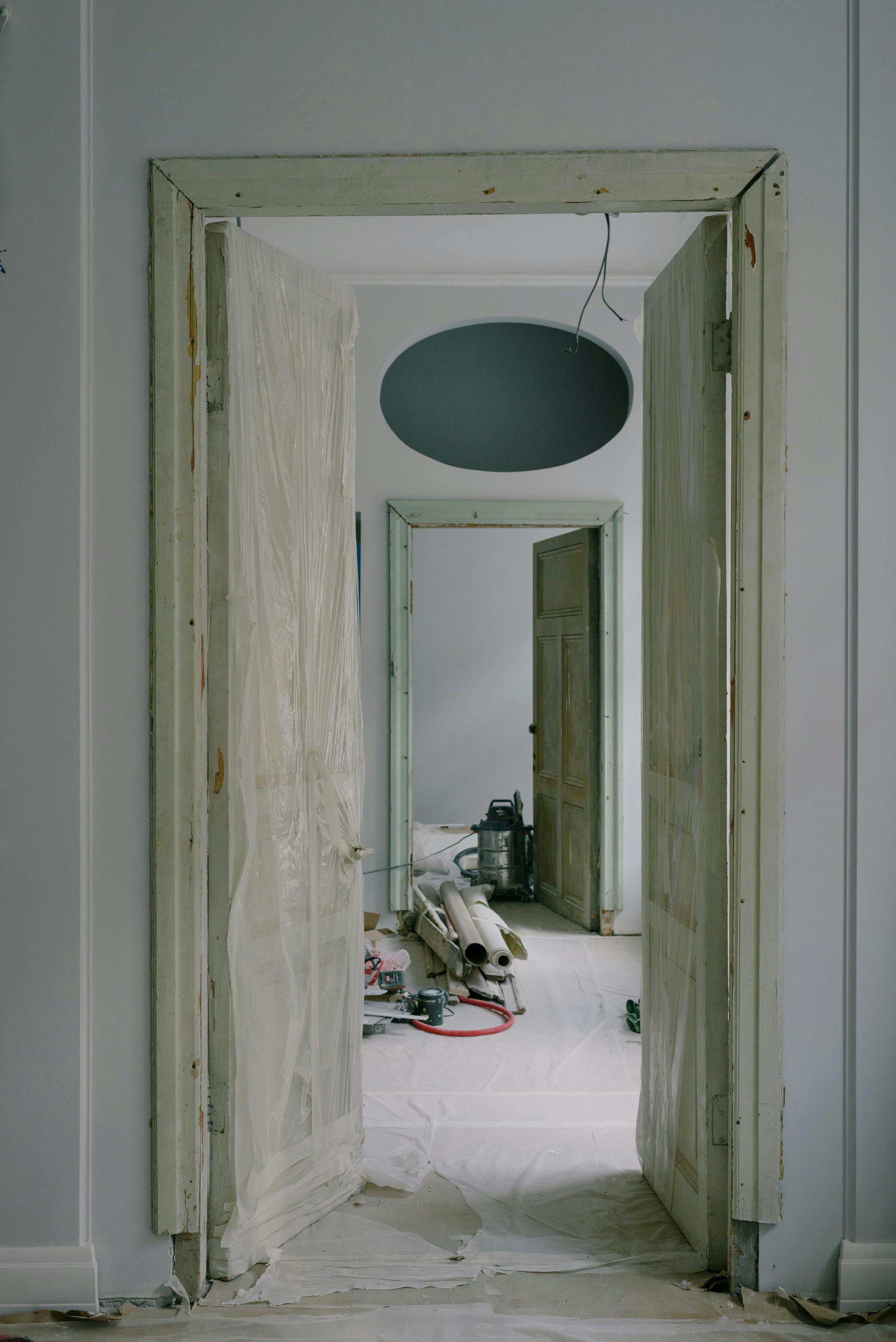
Anything that can’t meet the zoning code needs a variance, and a variance goes to the Town Council. The town’s Project Designation Manual Matrix sorts work into three tiers: full commission review, commission chair review, and staff review. Scope that lands in the middle tier goes to the relevant chair, ARCOM’s or the Landmarks Preservation Commission’s, who decides whether it needs a full commission hearing or can be approved administratively.
On the island, you price the approval before you price the renovation. A tired 1960s house on a good lot may be worth more than a finished one, or considerably less, depending entirely on what the commissions will let you do to it. That question belongs in due diligence, while you can still walk. Our guide to luxury renovation due diligence in Palm Beach covers how to structure the review.
When can work actually happen? The winter construction calendar
Between November 1 and April 30 each year, the Town of Palm Beach permits construction only Monday through Friday, 8:00 a.m. to 5:00 p.m., with no work on Saturdays, Sundays, town-observed holidays, the days before and after Thanksgiving, or from December 24 through January 1 (Town of Palm Beach, Working Hours for Construction, revised July 16, 2026). One narrow exception applies: multi-family properties south of Sloan’s Curve that are not on Ibis Isle may do quiet interior work on Saturdays between 9:00 a.m. and 5:00 p.m., provided the association board has approved those hours and the town has the approval letter on file.
Summer is looser. From May 1 through October 31, weekday hours run 7:30 a.m. to 5:30 p.m. and Saturday work is allowed from 9:00 a.m. to 5:00 p.m., though material deliveries, concrete pours, demolition and heavy equipment are all prohibited on Saturdays.
Calculated from the town’s published schedule, that’s about 45 permitted construction hours a week in winter against 58 in summer, roughly 22% fewer. And in the C-WA zoning district covering Worth Avenue, the schedule shows construction hours for May 1 through October 31 only, with no work permitted from November 1 through April 30.
So a buyer who closes in December and expects a spring renovation is planning against the calendar. Closing in season and spending the winter on permits leaves summer free for the actual work.
Oceanfront and lakefront: the checks that come before the offer
Work seaward of Florida’s Coastal Construction Control Line requires a state permit from the Florida Department of Environmental Protection, which regulates activity that “can cause beach erosion, destabilize dunes, damage upland properties or interfere with public access” (Florida DEP, Coastal Construction Control Line). That’s a layer inland property never touches, and it sits on top of everything the town already asks for.

The town supports that process with its own paperwork. A DEP Zoning Compliance Letter, confirming that work east of the control line meets local zoning, requires a signed and sealed plan set showing the control line, property lines, required setbacks and the Town of Palm Beach Official Bulkhead Line, plus a survey dated within the past year. Staff ask for about ten calendar days.
Waterfront due diligence also runs through the town’s flood and lighting rules:
- The town requires a Floodplain Development Permit for any repair, reconstruction, rehabilitation, alteration, addition or drainage-altering change on property in Special Flood Hazard Areas, Zones AE or VE, per the current Flood Insurance Rate Map. The application runs a four-step review, and the work carries three required inspections: a preliminary site inspection, a rough foundation inspection, and a final floodplain inspection. Elevation certificates are required at the last two.
- Palm Beach participates in the National Flood Insurance Program and the Community Rating System, which is what maintains premium discounts for property owners in town.
- Ocean-front owners must shield or position exterior lighting so it isn’t visible from the beach or water between March 1 and October 31 for sea turtle nesting season.
For the mechanics of docks, seawalls and channel depth across the wider county, our waterfront buyer’s guide for Palm Beach County goes deeper than this piece can.
What the purchase price doesn’t include
Florida charges documentary stamp tax on deeds at 70 cents per $100 of consideration in every county except Miami-Dade (Florida Department of Revenue, Florida Documentary Stamp Tax, citing s. 201.02(1)(a), F.S.). On a purchase at the island’s second-quarter 2026 single-family median of $15.4 million, that line alone comes to $107,800.
Property tax is the recurring number, and the mechanics matter more than the rate. For the fiscal year beginning October 1, 2026, the Town Council intends to hold the town’s rate at $2.61 per $1,000 of taxable value, with assessed values on the island averaging a 9% increase (Palm Beach Civic Association, reporting on the July 2026 budget workshop, published July 20, 2026). That’s the town’s share only. County, school district and other taxing authorities add their own millage on top.
| Cost item | How it works | Source |
|---|---|---|
| Documentary stamp tax | $0.70 per $100 of consideration, paid at recording | Florida Dept. of Revenue |
| Town millage (FY 2026-27 intent) | $2.61 per $1,000 of taxable value, town portion only | Palm Beach Civic Association, July 2026 |
| Assessment cap, primary residence | 3% or CPI, whichever is lower | PBC Property Appraiser |
| Assessment cap, second home | 10% a year, and it does not cap school millage | PBC Property Appraiser |
| Early-payment discount | 4% in November, stepping down to 1% in February | PBC Tax Collector |
The assessment cap is where second-home buyers get surprised. Florida’s Save Our Homes cap holds homestead assessment growth to 3% or the change in the Consumer Price Index, whichever is lower. A property without homestead exemption is capped at 10% a year instead, and that 10% cap does not apply to school board millage (Palm Beach County Property Appraiser, Assessment Caps). The existing cap holds for the balance of the tax year you buy in, then the property is reassessed at full market value the following year, so the seller’s tax bill tells you very little about yours.
Countywide taxable property values rose 7.35% from 2025 to 2026 (Palm Beach County Property Appraiser, 2026 tax roll preliminaries). Tax bills are mailed by November 1, with a 4% discount for paying in November that steps down to 1% by February, and taxes go delinquent April 1 (Palm Beach County Tax Collector).
Insurance is its own conversation at this price point. Under Florida law, a structure with a dwelling replacement cost of $700,000 or more is not eligible for coverage from Citizens Property Insurance, the state-backed insurer, except in counties where regulators find competition inadequate (s. 627.351(6), Florida Statutes). Assume an island single-family address sits above that line, then confirm it on the property.
That means the statewide Citizens headlines, including the average 8.8% multiperil reduction that took effect July 1, 2026 for new policies and reaches existing ones at renewal, describe a market most island buyers won’t be in (Citizens Property Insurance Corporation, March 4, 2026). Order a quote on the specific address before the inspection period starts. Our breakdown of closing costs for Florida buyers and the true cost of owning a beachfront home fill in the rest of the carry.
How to run the search without losing a season
Supply is what limits this market. Single-family listing inventory on the island fell 5% year over year in the second quarter of 2026 while closings rose 35%, and condominium inventory fell 20% (Corcoran, 2Q 2026). When only 50 houses trade in a quarter, the gap between seeing a property and hearing about it afterward usually comes down to who is watching the market for you.
Cash makes up a large share of this county’s activity. In June 2026, 49.5% of all Palm Beach County closings were cash: 43.5% of single-family sales and 58.7% of condominium sales (MIAMI REALTORS, June 2026 data). Those are countywide figures spanning every price tier, not island-specific ones, but when roughly half of county closings are cash, a financing contingency costs you something, and the rest of your offer has to make up for it.
A workable sequence looks like this:
- Set the segment first, single-family or attached, since they behave like separate markets.
- Get the insurance quote and the permit history on any address you’re serious about, before the inspection period runs down.
- Ask what the town will approve on that lot, and build the renovation budget around the answer.
- Line up proof of funds so an offer can move at the market’s actual speed.
The Cahur Group is a Keller Williams Jupiter team of eight agents based in Jupiter, working across Palm Beach County and Martin County, and we work in English, Spanish and French. If you want a straight read on a specific address rather than a market summary, get in touch or call 561-401-5758.
Frequently asked questions
Can I rent out a Palm Beach Island home short-term?
No. The Town of Palm Beach states in its published FAQ that all short-term rentals, including Airbnb, are strictly prohibited. Long-term rental is permitted when you are renting one property; owning more than one rental unit in town requires a Business Tax Receipt from the Planning, Zoning and Building department.
How much is property tax on Palm Beach Island?
The town’s own rate is proposed to hold at $2.61 per $1,000 of taxable value for the fiscal year starting October 1, 2026 (Palm Beach Civic Association, July 2026). County, school and district millage go on top of that. A second home is capped at 10% assessment growth a year rather than the 3% homestead cap, and the property is reassessed at full market value in the year after a sale.
Do I need town approval to renovate a house I already own here?
Almost certainly. The Town of Palm Beach requires a permit for all work except carpet, wallpaper and interior painting. Exterior work goes to the Architectural Commission, or to the Landmarks Preservation Commission if the property is designated, and the town protects more than 328 landmark properties, sites and vistas.
What schools serve Palm Beach Island?
The School District of Palm Beach County sets public school attendance boundaries for the island and revises them periodically. Confirm the assigned schools for a specific address directly with the district before you rely on any boundary, since zoning can change between the listing date and your closing.
What should an international buyer know about the island?
Cash accounts for a large share of Palm Beach County closings, 49.5% in June 2026 (MIAMI REALTORS), so an offer that depends on US financing can read as weaker than a competing one. Ownership structure, withholding on resale and reporting obligations all need specialist tax and legal advice. Our Florida guide for foreign buyers covers the framework.
The short version
Palm Beach Island in 2026 is a supply-constrained market where single-family homes traded at a $15.4 million median in the second quarter while inventory fell (Corcoran, 2Q 2026). Finding the house and agreeing on a number is the part that behaves like any other purchase.
The rest of the work happens before you sign: reading the town’s approval path for that specific lot, getting insurance priced at the address rather than at a county average, and budgeting a renovation around a calendar that goes quiet from November through April. Expect the assessment to reset to full market value in the year after you close.
For the wider county picture, see our Palm Beach County market update for Q3 2026. If you’re still weighing the island against a specific alternative, start with the Manalapan comparison.
